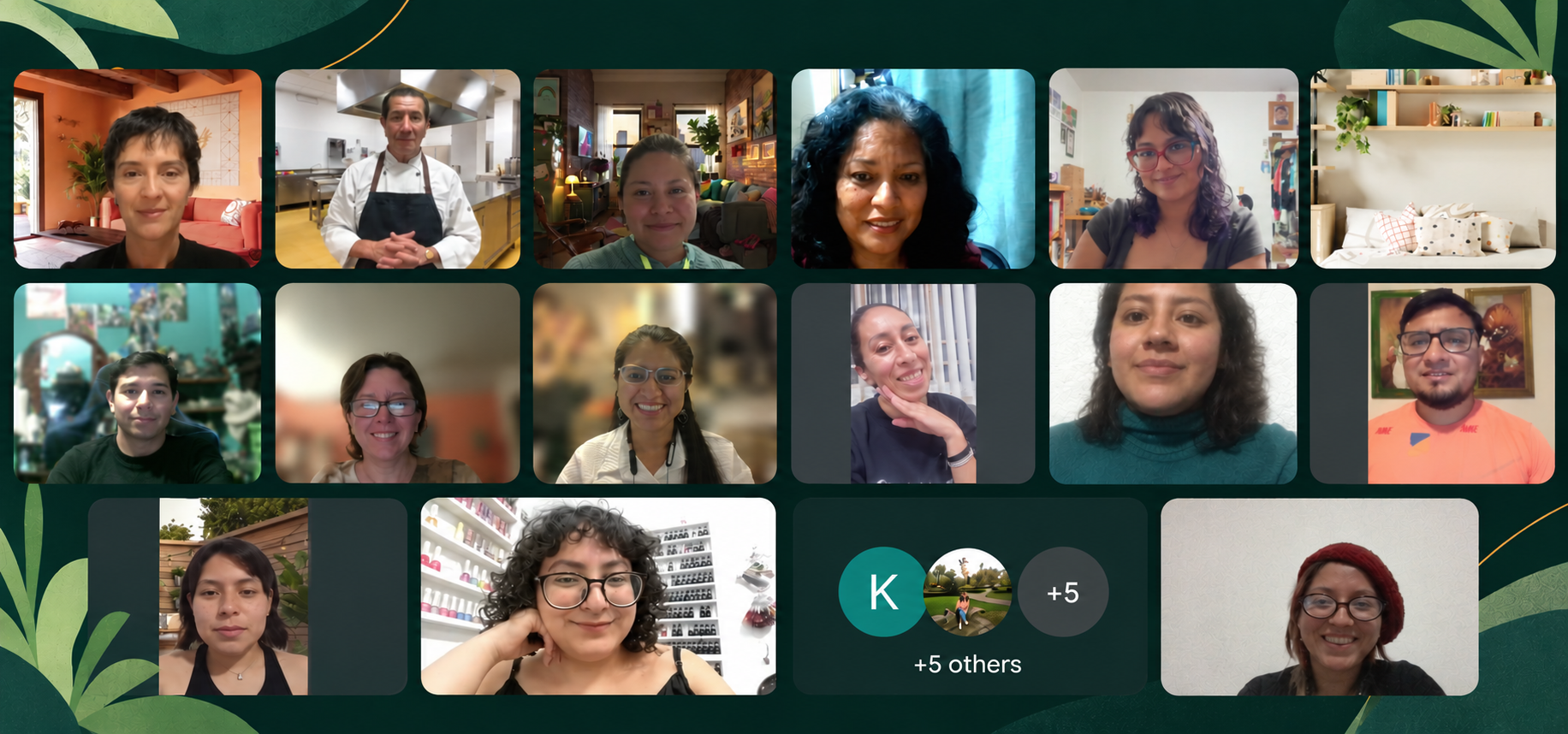
One of our cohorts
What does it take to prepare people for a transition to a food system that is more ethical, sustainable, and community oriented?
We set out to explore that question with the first cohort of Plant Futures México, Sistemas Alimentarios para el Cuidado del Planeta (Food Systems for Planetary Care). It was an 8-week, Spanish-language course on food systems, ecology, health, and multispecies relationships.
The pilot became more than a course. Through curriculum development, live sessions, student projects, and conversations with learners, we saw what people needed to learn. We also saw what is still missing from climate education as a whole. If we want people to take part in transforming food systems, we need to rethink how education prepares them for that work.
Here are 8 things the pilot taught us.
1. We need resources rooted in place
One of the clearest challenges was finding educational resources that speak to the realities of Mexico and Latin America. There is plenty of information on climate change and food systems. But much of it is produced elsewhere, designed for other education systems, or disconnected from local histories, cultures, ecosystems, and policies.
Building the course meant translating broad concepts into local contexts. We covered the milpa and chinampas, land concentration, agricultural labor, food policy, water, and the power structures shaping what reaches our plates. We don’t simply need more content. We need content developed for particular places, languages, and communities.
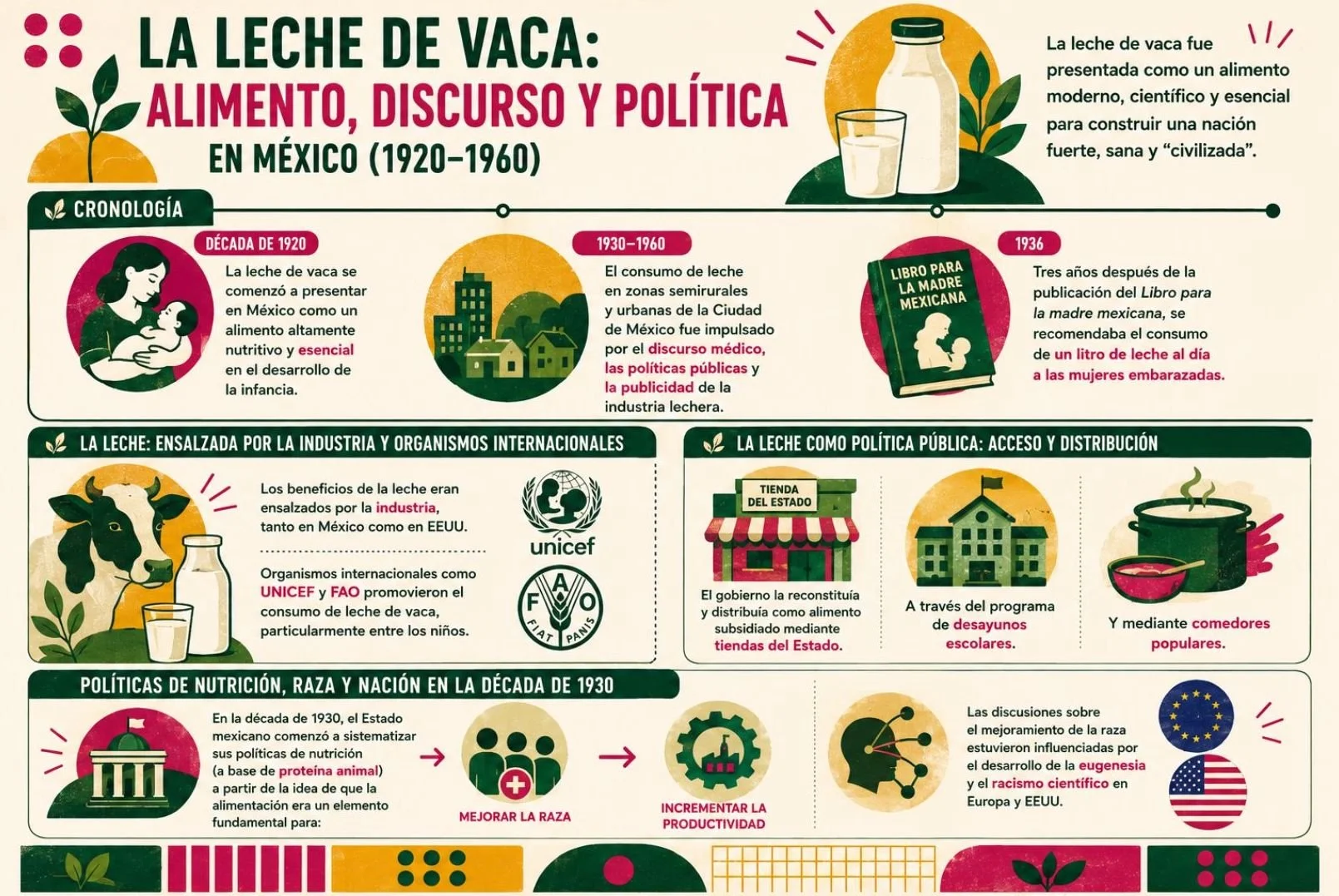
Political history of cow milk in Mexico
2. Education needs dialogue, not only content
Food systems connect agriculture, health, ecology, economics, culture, policy, labor, and community. Learners need room to question, discuss, and connect ideas, not only receive information.
Some of the most meaningful moments in the course came from conversations with invited specialists, group discussions, and practical activities that brought different fields together. Climate action is collaborative, and the classroom can be a place where networks begin to form.
3. Language shapes how we understand our territories
Teaching in Spanish was not only a matter of translation. Language carries history, culture, and relationships to place. Some concepts gain meaning in the language people use every day. Others make us question whether the vocabulary we inherited fits the realities we are trying to understand.
This mattered most when we discussed food justice, sovereignty, territory, and multispecies relationships. It led us to ask: Whose knowledge counts? What happens when global sustainability frameworks meet local histories and ways of knowing? Education for systems change cannot simply import concepts. It has to make space for knowledge that comes from the places where learning happens.
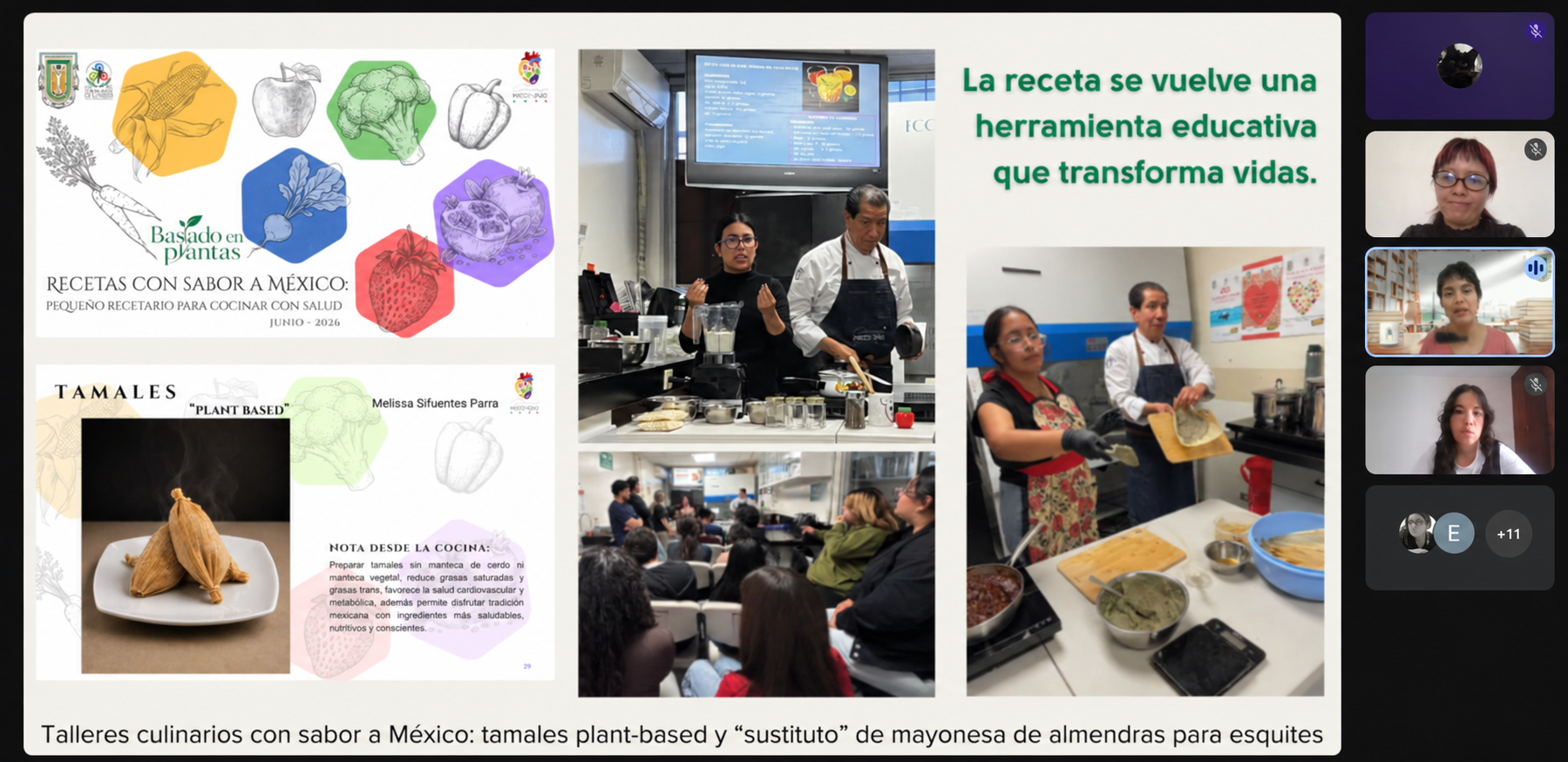
Role of recipe as a cultural education tool
4. Online access is not equal access
The virtual format reached people across Mexico without requiring anyone to travel. But participants still faced connectivity and technology issues, time constraints, workloads, and family responsibilities. Severe weather and infrastructure disruptions made those barriers more visible.
This is a real tension for climate education. Digital learning expands access, yet the infrastructure it depends on is itself vulnerable to climate change. Putting a course online is not enough. We have to consider the material conditions that make participation possible.
5. Institutions lag behind the future
The problem is not only a lack of climate content. Many educational institutions are still organized around disciplines and assumptions designed for a different world. Meanwhile, learners face climate instability, ecological loss, technological change, inequality, and shifting labor systems.
The question is whether education prepares people to understand and transform the systems producing these conditions. Individual motivation is not enough. People need the knowledge, skills, relationships, and institutional pathways to act.
6. Climate education is about how we see
Climate education is often framed as what people need to know. The pilot reinforced that it is also about how people learn to see.
Systems thinking looks at relationships rather than isolated parts. Ecological thinking focuses on interdependence. Critical thinking questions inherited assumptions and power structures. Futures thinking imagines possibilities beyond the status quo. Place-based learning pays attention to where we live. These are ways of thinking, not topics. They help people recognize patterns, question systems, and imagine alternatives.
7. Courses need infrastructure
Courses alone are not enough. Climate education also needs to exist, adapt, and become part of institutions. For that, it needs:
Learning standards and competencies
Curriculum frameworks
Context-specific materials
Teacher guides
Professional development
Assessment tools
Credentials
Evaluation
Institutional support
Policy
We built many of these pieces ourselves during the pilot. Defining what learners should understand, what they should be able to do, and how to assess it showed how much foundational work remains. Climate education is an infrastructure challenge as much as a content challenge.
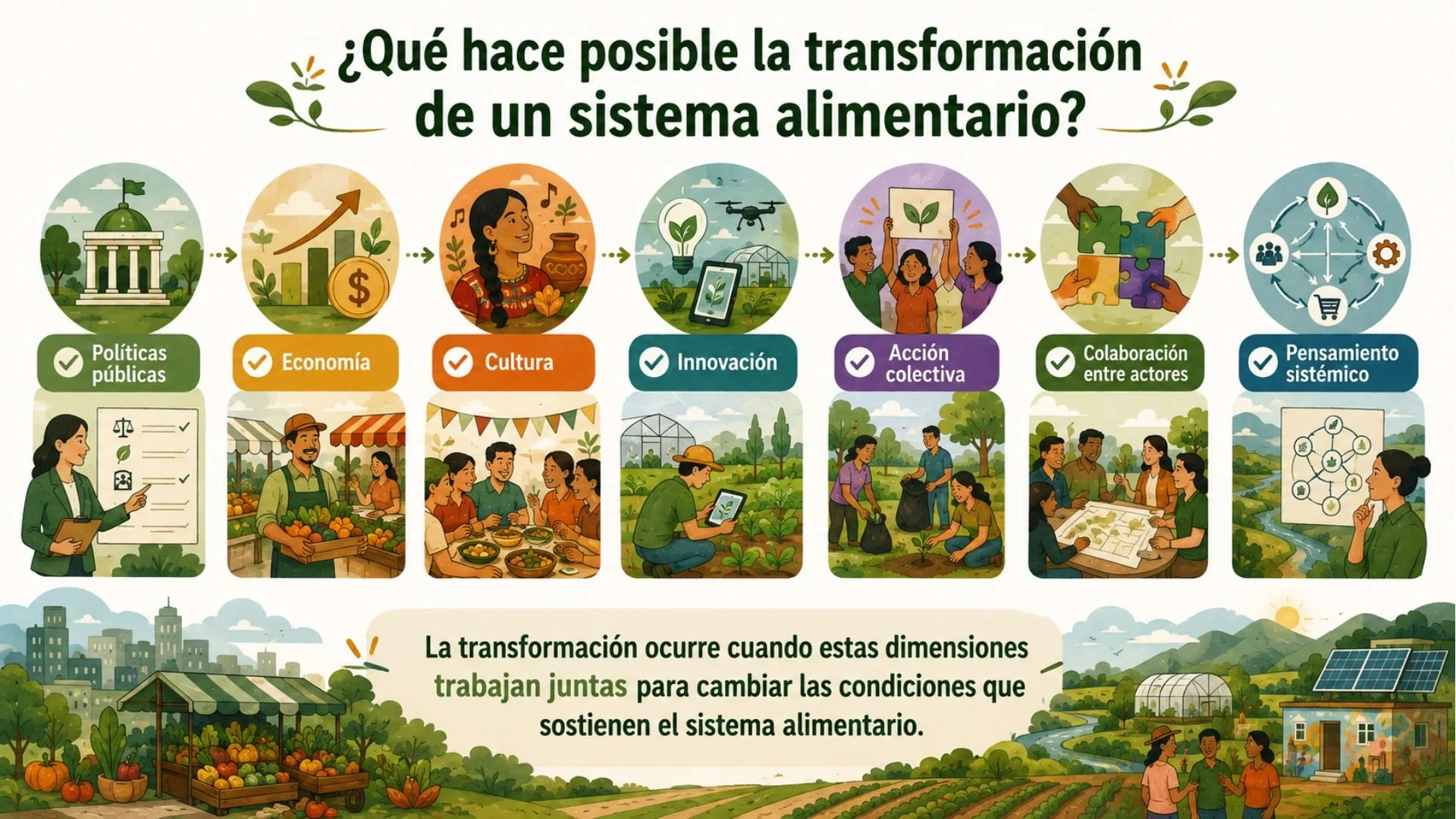
Diagram demonstrating all that is needed for transforming the food system
8. Learning can start with the everyday
Climate education does not have to begin with climate change. It can begin with food on a plate, water from a tap, a storm that knocks out power, a heat wave, or the price of groceries. Who grows our food? Who transports it? Who cooks it? Who has access to it?
These everyday experiences already connect to larger systems. Education can help people see those connections, instead of asking them to memorize facts about problems that feel distant. This learning can happen at any age. It can take place in schools, universities, community organizations, gardens, kitchens, workplaces, and online. The goal is to help people see the present differently.
Building educational infrastructure for the transition
The first cohort gave us a small window into what food systems education can be when it is approached as a space for systems thinking, dialogue, relationships, and action.
Plant Futures’ goal goes beyond running courses. We want to help build the educational infrastructure for the transition. That includes the competencies, curricula, materials, assessment tools, educators, institutions, and policies that prepare people to understand a changing world and take part in changing it. The shift to more just and sustainable food systems will require technological, economic, political, and cultural transformation. It will also require educational transformation.
Join our next courses
Would you like to join a future Plant Futures course? Or bring this learning to your school, university, or organization? Subscribe to our newsletter and we’ll let you know when enrollment opens.