Plant Futures started 2026 with clear momentum across culture change, education, student organizing, partnerships, and global expansion. This quarter shows what happens when plant-centered food systems work moves beyond the classroom and into the spaces where people actually build culture: campuses, festivals, public conversations, and community networks.
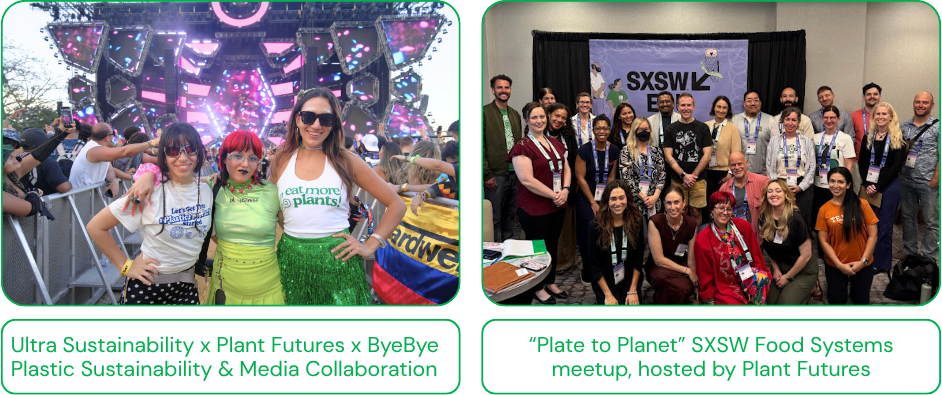
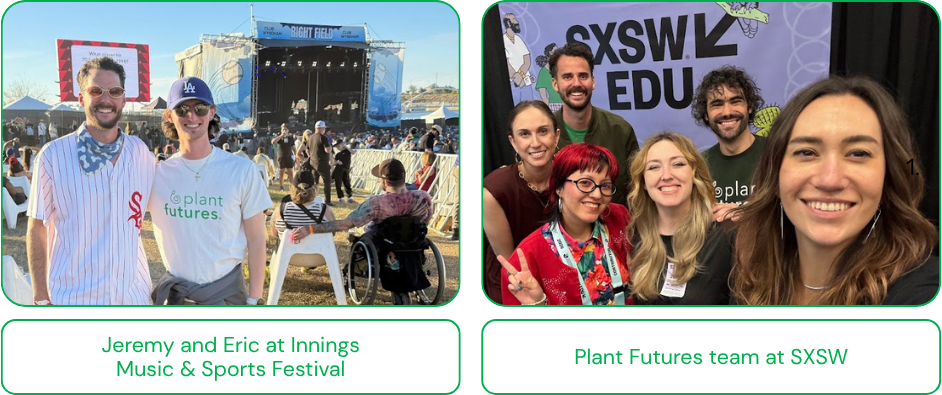
One of the biggest shifts in Q1 was Plant Futures’ expansion into major public arenas beyond campus. Through partnerships and appearances connected to SXSW, Ultra Music Festival, Okeechobee, Innings Festival, the Music Sustainability Alliance, the Music Sustainability Summit, and AVA Buenos Aires, the organization pushed food systems into wider conversations about sustainability, creativity, and cultural influence. Plant Futures also hosted its “Plate to Planet” meetup at SXSW and conducted more than 20 artist interviews across festival spaces, building new visibility with audiences in music, media, and the arts.
The education side also scaled in a serious way. The Spring 2026 UC-wide Introduction to Plant-Centric Food Systems course brought together 75 students from 9 UC campuses working on 17 real-world projects across research, policy, business strategy, and behavior change. A standout development this quarter was collaboration with NASA Earth Science researchers, including student work on mapping animal agriculture across the Amazon, identifying biodiversity data gaps, and translating satellite science into policy and communications strategy
That curriculum work is also grounded in a broad ecosystem of partners and practitioners. The course includes projects with organizations and companies such as Animal Outlook, Balanced, Berkeley Dining, Better Food Foundation, FreshPicked, OoMee, Switch4Good, Turning Green, and Vegan Hospitality, while guest speakers brought expertise spanning health, climate, culinary innovation, entrepreneurship, media, and policy. The result is not just academic learning, but a model that connects students directly to live movement infrastructure and applied problem-solving.
Across the chapter network, Q1 was equally active. Plant Futures reported more than 140 student-led events across January and February alone. UCLA hosted its second Sustainable Food Futures Fair with 20-plus companies and more than 100 attendees, and the event also marked the launch of Plant Futures’ Career and Mentorship Program for 2026. At the same time, chapters continued building highly localized programming, while the network expanded geographically with its first chapter in India and seven more chapters identified as launching soon.
Partnership work also showed strong reach. Q1 campaigns centered on welcome-back-to-school, Valentine’s Day, and March Madness, reaching more than 1,000 people in person and over 40,000 online. Highlights included UCLA’s Hodo Foods collaboration, distribution partnerships involving Louisville Foods, expansion of the Fruit Riot partnership from 13 to 18 schools, and the “Flavor Madness” campaign featuring 16 schools in a bracket-style cooking competition sponsored by Impossible.
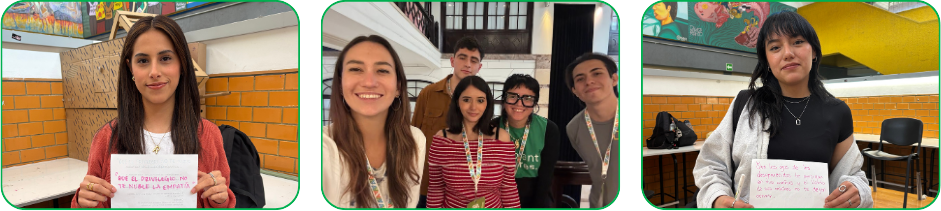
Globally, Plant Futures continued building serious infrastructure for growth in Latin America. The organization advanced its Spanish-language Plant Centered Food Systems curriculum toward pilot and launch readiness, engaged educational leaders from Universidad Autónoma de Baja California and Universidad Veracruzana, and deepened relationships with organizers in Querétaro and Mexico City through AVA Buenos Aires. Q1 also included ecofeminist gatherings for International Women’s Day and student-led programming designed to connect climate, justice, and plant-centered systems change.
Taken together, the quarter signals something bigger than a list of activities. Plant Futures is building a multi-channel model for systems change: one that links student leadership, public storytelling, academic rigor, creative culture, and international movement-building. Q1 2026 suggests the organization is not just growing in scale, but widening the kinds of spaces where plant-centered food systems can become legible, compelling, and actionable.
Want the full breakdown?
Read the complete Plant Futures Q1 2026 Update PDF for the full reca